
BNP Paribas Sustainable Finance Hackathon Hong Kong 2026: Accelerating Innovation in Sustainable Finance


THE HACKATHON IN A FEW WORDS
At BNP Paribas, we believe that collaboration, diversity of perspectives and real-world experimentation are powerful drivers of innovation.
This Hackathon brings together students’ ideas and BNP Paribas’ sector expertise to address a concrete sustainable finance challenge linked to ocean protection. As a leading international bank, BNP Paribas works closely with companies operating in sectors that strongly depend on marine ecosystems, while facing growing environmental, regulatory and financial pressures.
In this context, accelerating innovation in sustainable finance means going beyond concepts to design practical, finance-driven solutions that help companies reduce their ocean-related impacts, while remaining economically viable, measurable and scalable.
This second edition of the challenge offers participants the opportunity to work on real issues faced by BNP Paribas and its clients, with the guidance of BNP Paribas professionals and in partnership with the Tara Ocean Foundation.
WHY COMPETE ?

But also…
- Solve a real problem by designing a practical solution, grounded in real economics and financial constraints
- Understand how financial institutions support companies in managing environmental risks and transitions
- Benefit from project approach guidance from BNP Paribas professionals with experience in sustainable finance
- Expand your professional network and strengthen your profile with hands-on exposure to finance-driven impact solutions
WHY OCEANS MATTER FOR SUSTAINABLE FINANCE?
Oceans play a critical role in the global economy and climate system. They support trade, food systems, energy production, tourism, and innovation, while providing essential ecosystem services such as carbon absorption and biodiversity preservation. Yet many economic activities remain heavily dependent on marine resources while contributing to ocean degradation through pollution, emissions, over-extraction and habitat destruction.
BNP Paribas has long recognised the strategic importance of oceans within the transition to a sustainable economy. BNP Paribas has progressively built a strong positioning on ocean-related topics, through:
- Its public commitments on ocean protection (Ocean CSR Public Position – BNP Paribas, For a Sustainable Blue Economy: Five Years of BNP Paribas Initiatives),
- Its work on financing the blue economy (Blue Horizons: The Rise of Blue Bonds in Sustainable Investment, Blue Horizons: Tackling Marine Plastic and Chemical Pollution, Banks Have a Key Role to Play in Financing Solutions That Help Preserve the Ocean),
- Its support for marine scientific research (Blue Horizons: BNP Paribas’ Support for Marine Scientific Research), and
- The development of innovative financial instruments such as blue bonds and sustainability-linked financing frameworks addressing marine impacts.
These initiatives reflect BNP Paribas’ belief that finance has a key role to play in supporting companies’ transition, aligning capital with environmental outcomes, and scaling solutions that preserve marine ecosystems while supporting economic activity.
Partnership with the Tara Ocean Foundation
This Hackathon is organised in partnership with the Tara Ocean Foundation, the first public interest foundation in France dedicated to the study and protection of the ocean.
For over 20 years, Tara Ocean Foundation has been striving for a revolution to preserve life, convinced that the ocean is essential to the equilibrium of our planet. Exploring the ocean and sharing scientific discoveries to raise collective awareness is at the heart of the foundation’s mission.
It leads scientific expeditions, in partnership with leading international research laboratories, to study marine biodiversity and understand the impacts of climate change and pollution. It raises public awareness, from the younger generation to political decision-makers. Thanks to its UN Special Observer Status, the foundation plays an active role in international Ocean governance.
BNP Paribas has been a long-standing partner of the Tara Ocean Foundation, supporting its scientific missions and contributing to the bridge between science and finance. This collaboration reflects a shared ambition: ensuring that economic and financial decisions are informed by robust scientific evidence.
The partnership is particularly timely as the Tara Coral expedition (2026 – 2027) will be launched in May 2026. This expedition focuses on understanding the mechanisms behind coral reef resistance to global warming, a critical topic for biodiversity, coastal economies and climate resilience, especially in regions such as Asia-Pacific.
Discover the foundation at https://fondationtaraocean.org and on video .
JOINING THE CHALLENGE
This challenge invites all students in the penultimate year of their undergraduate studies or higher (including postgraduates) from any academic programme of The Chinese University of Hong Kong (CUHK), The City University of Hong Kong (CityU), The University of Hong Kong (HKU), and The Hong Kong University of Science and Technology (HKUST) to design a solution related to a specific issue on sustainability faced by the Bank. Each team should consist of 4-6 students from the same university but can be enrolled in different academic programmes.
You can refer to these resources for more details:
Flyer: Sustainable Finance Challenge Overview
FAQ
Registration Form
NEXT STEPS
- Register for the kick-off webinar on 30 January 2026 via our registration page by 29 January 2026.
- Form your team and send us your Registration Form by 13 February 2026 via email to sf.hackathon.hk@asia.bnpparibas.com.
TIMELINE

PHASE I – QUALIFICATION PHASE
During Phase I, participating teams are invited to work independently on the challenge and prepare a proposal responding to the problem statement by 27 February 2026.
Teams are expected to select one high-ocean dependency sector among Aquafood, Pharmaceutical, Energy or Tourism, and design a conceptual solution that connects ocean impact reduction with a realistic financing mechanism.
SECTORS
Aquafood
The aquafood sector is one of the most ocean-dependent industries in the world. Seafood provides a primary source of protein for more than 3 billion people, and the sector supports around 60 million jobs globally. At the same time, pressure on marine ecosystems is increasing, with over 35% of global fish stocks currently overexploited. The long-term viability of the sector is therefore directly linked to the health of the ocean, making it a natural candidate for solutions that combine sustainable practices, measurable impact and innovative financing mechanisms.
Pharmaceutical
The pharmaceutical sector relies on the ocean in less visible but highly strategic ways. More than 50% of medicines are derived from or inspired by natural compounds, including marine biodiversity, while global pharmaceutical supply chains depend heavily on maritime transport and water-intensive production processes. At the same time, pharmaceutical residues are increasingly detected in marine environments, creating growing environmental and regulatory pressure. This combination of dependency and impact makes the sector particularly relevant for exploring financing models that link pollution reduction and marine protection to verifiable outcomes.
Energy
The energy sector has a deep and structural relationship with the ocean. Around 30% of global oil and gas production takes place offshore, and offshore wind is among the fastest-growing renewable energy segments worldwide. Energy infrastructure relies on marine space, seabed stability and coastal ecosystems, while also generating significant environmental pressures. As the sector accelerates its transition, it faces the challenge of balancing energy security, climate objectives and ocean protection, creating a strong case for performance-linked financing solutions tied to measurable marine impact.
Tourism
Coastal and marine tourism is economically built on the attractiveness and health of ocean ecosystems. The sector generates hundreds of billions of dollars in annual revenue, with coral reefs alone contributing an estimated USD 36 billion per year to global tourism. However, unmanaged tourism is also a major driver of coastal degradation, pollution and reef damage. This direct link between economic value and ecosystem health makes tourism a particularly relevant sector for designing financing mechanisms that reward conservation and long-term ocean resilience.
PHASE I – PROBLEM STATEMENT
Design a prototype that helps a company in one of the following high ocean-dependency sectors (Aquafood, Pharmaceutical, Energy, or Tourism) to reduce its negative impact on the ocean and connect this improvement to a financing mechanism. Your prototype should:
1. Identify ocean dependencies and impacts
Explain how the company or sector depends on the ocean and how its activities create environmental impacts (e.g. resources, ecosystems, emissions, pollution, biodiversity). Which pain point should be addressed by the company to reduce significantly their impacts?
2. Propose ocean-positive actions
Suggest relevant ocean conservation, restoration, or transition actions that could realistically be implemented and financed. Explain how these actions could be profitable for the company, with positive impacts both on the environment and on people (employees, customers, society).
3. Link actions to a financing mechanism
Show how a financing solution could incentivize, reward, or scale these actions (no detailed financial modelling required – focus on the logic).
Examples: blended finance, loans, bonds, etc.
4. Provide a simple environmental, social and governance (ESG) and impact reporting template
Outline the key indicators that would be monitored, reported, and verified. Feel free to showcase a highly visual reporting to attract investors.
PHASE I – DELIVERABLES AND EVALUATION CRITERIA
Deliverable: up to 5 slides maximum, PDF format, in English
1. Relevance to the challenge
- Clear understanding of the problem statement
- Strong link between ocean dependencies, environmental impact, and the proposed solution
- Alignment with one of the targeted high ocean-dependency sectors
2. Creativity and innovation
- Originality of the approach
3. Value proposition and impact potential
- How clearly does the solution address the challenge and deliver value for the client and for the environment?
4. Feasibility and implementation potential/scalability
5. Overall quality of the presentation
The submissions will be evaluated by BNP Paribas professionals based on the above criteria. Following this evaluation, six finalist teams will be selected and announced on 6 March 2026.
PHASE II – HACKATHON
The selected finalist teams will be invited to join us at our BNP Paribas office for a whole-day event on 20 March 2026. Finalist teams will work closely with BNP Paribas professionals to further develop, refine and challenge their solutions in a real-world financial context.
Following the announcement of the finalist teams on 6 March 2026, the teams will have 2 weeks to further develop their idea prior to the Hackathon event. The objective is to leverage this time to refine your solution and prepare a compelling pitch presentation at the Hackathon event.
Finalist teams will be invited to join the online briefing session on 13 March 2026, designed to prepare the finalists for the next stage of the challenge. This session will provide additional guidance on expectations, format and practical arrangements for the in-person Hackathon at BNP Paribas office.
The detailed problem statement will be revealed on the morning of the Hackathon. The Hackathon will be an intensive, full-day collaboration where student teams design and pitch a practical solution for the problem statement. It will be a hands-on, collaborative sprint where you turn a sustainability finance idea into a tangible prototype and present it to real world stakeholders – all within a structured, supportive environment.
Throughout the day, participants will:
- Engage in hands-on working sessions to strengthen their proposals
- Receive guidance and feedback from BNP Paribas advisors
- Gain exposure to how sustainable finance solutions are assessed, structured and discussed in practice
The day will conclude with final presentations to a jury composed of BNP Paribas senior representatives.
THE JURY
The finalists will be invited to present their solution to a panel of jury from BNP Paribas management.
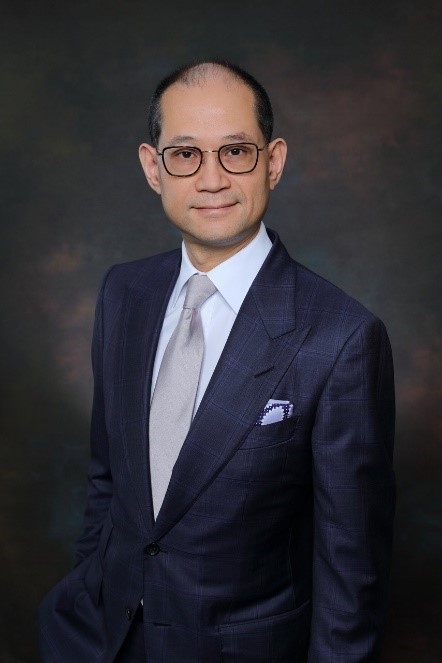
Hugo Leung
Chief Executive Officer of BNP Paribas Hong Kong;
Chief Executive Officer of BNP Paribas Securities (Asia) Ltd
Hugo Leung is the Chief Executive Officer for Hong Kong, BNP Paribas and CEO of BNP Paribas Securities (Asia) Limited. He oversees the full breadth of the bank’s integrated and diversified offering in Hong Kong, encompassing all corporate and institutional banking activities.
As its CEO, Hugo is responsible for the overall management of the legal entity of BNP Paribas Securities Asia, supervising its activities. Prior to his current role, he oversaw Global Markets activities in Hong Kong including fixed income, equities and commodity derivatives business.
Hugo has extensive financial services experience and held various roles since joining BNP Paribas in 1993. He has a B.A. degree in Economics from Simon Fraser University in Canada.
Hugo was appointed as Independent Non-Executive Director for Hong Kong Exchanges and Clearing Limited (HKEx) in April 2017, where he serves on the Audit Committee, Board Executive Committee, Investment Committee, Board Risk Committee, Risk Management Committee (Statutory) and Listing Operation Governance Committee.
In April 2022, Hugo began serving as Non-Executive Director of OTC Clearing Hong Kong Limited and subsequently elected as Board Chairman and Chairman of the Risk Management Committee a year later. He was also appointed as Non-Executive Director of LME Clear Limited in July 2024.

Sabrina Noiran
Chief Sustainable Business Officer, Corporate & Institutional Banking APAC, BNP Paribas
Sabrina Noiran is the Chief Sustainable Business Officer for BNP Paribas Corporate and Institutional Banking in Asia Pacific, leading the implementation of the Bank’s sustainability strategy across the region. With two decades of international banking experience spanning France, Hong Kong, and Singapore, she brings a wealth of expertise to this critical role.
As an experienced practitioner in sustainable finance, Sabrina serves on the BNP Paribas CIB Global Sustainability Board and is an alternate board member of the Singapore Green Finance Centre (SGFC). She actively contributes to numerous regional working groups, shaping the development of sustainable finance in Asia Pacific.
Sabrina holds a Master’s degree in International Business Law from the University of Toulouse 1, France.

Rosalia Kwong
Head of Human Resources Hong Kong, BNP Paribas
Rosalia joined BNP Paribas in 2019 as Head of Human Resources Hong Kong, with direct responsibility for all business, coverage and functions lines. With over 25 years of HR experience in the banking industry, she leads the Hong Kong HR team in delivering solutions-based HR services and advisory in accordance with local regulatory and statutory requirements, as well as implementing local and regional HR initiatives in Hong Kong.
As the person-in-charge of the Hong Kong HR platform, Rosalia collaborates with the HR Centres of Expertise to provide support to the Head of Territory and Territory Management in executing transversal strategic initiatives relating to their specific people agenda.
Prior to joining BNP Paribas, Rosalia held several leading HR positions in OCBC, Societe Generale, DBS and Standard Chartered Bank, all of which were based in Hong Kong.
WATCH A RECAP OF SUSTAINABLE FINANCE UNIVERSITY CHALLENGE HONG KONG IN 2025
Should you have more questions regarding the scope of the questions, expectations, or anything pertaining to the challenge, don’t hesitate to email sf.hackathon.hk@asia.bnpparibas.com. We will do our best to provide any guidance you will need to come up with your solution for the challenge.
The Hackathon is organised in partnership with

